Quick Summary
The best way to load a dumpster is to walk your bulky items in through the rear gate first, lay heavy and flat material across the floor, break everything else down so it packs tight, fill the gaps with small debris, and keep the whole load below the top rim. Loaded that way, a 10, 15 or 20-yard roll-off from The Dumpster Guy Escambia holds noticeably more, picks up cleanly, and gets your project in Pensacola done in one haul.
Why loading a dumpster well pays off
Most people fill a dumpster the way they'd fill a trash can: open the lid and throw. That works until the box looks full with half its space still empty underneath, and you're left deciding between a second haul and a pile in the driveway.
A little order fixes that. The same container can hold a lot more when it's loaded like a moving truck instead of a laundry basket, and a level, well-packed load is the kind that leaves on schedule.
Plan the load before the dumpster arrives
Ten minutes of planning saves an afternoon of reshuffling. Before delivery day, sort what's coming out into three piles: big bulky items, heavy and flat material, and loose small debris. Set aside anything that can't go in a roll-off so it doesn't end up buried in the middle of the load.
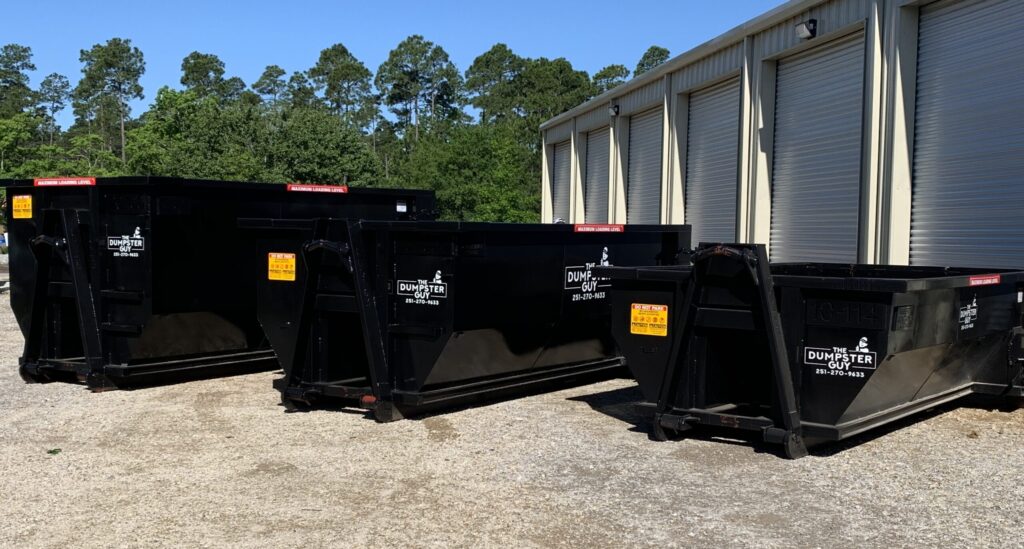
This is also the moment to check you've got the right container. Our dumpster sizes page shows each one in pickup truck loads: about 4 for a 10-yard, 6 for a 15-yard and 8 for a 20-yard. If your piles look bigger than that, size up now rather than after the box is full.
Think about where it sits
Leave a clear path from the work area to the back of the container. You'll make dozens of trips, and a straight walk to the rear gate is faster and safer than lifting everything over the side.
Use the rear gate for the big pieces
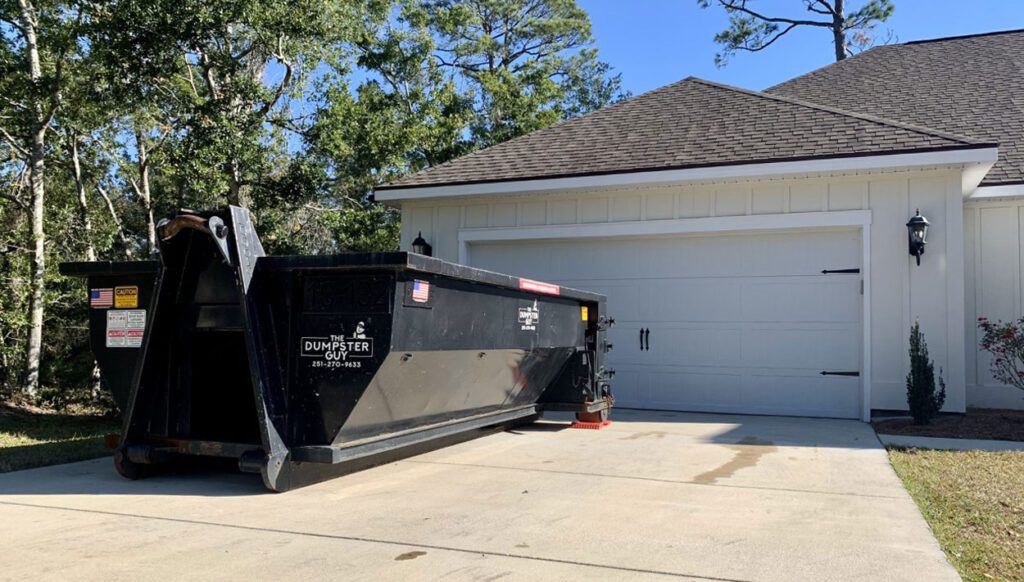
Every roll-off we deliver in Escambia County has a rear gate or swinging door, and it's the most useful part of the container. Walk furniture, mattresses, cabinets and appliances in through the back and set them at the far end first.
Loading the big pieces through the gate means you're not wrestling a sofa over a sidewall, and placing them at the front of the box keeps the space near the gate open for everything that follows. Close and latch the gate once the floor is covered and you start building height.
Heavy and flat goes on the bottom
After the bulky pieces, lay down your heaviest, flattest material across the floor: drywall, plywood, lumber, doors, tile and shingles. A flat base keeps the weight low and even, which is what lets the truck lift the container safely.
Lay boards and panels flat rather than standing them on end. A sheet of plywood on its edge eats a foot of height you'll want later. Spread the heavy material from side to side and front to back instead of building one tall pile in a corner.
Break it down and pack it tight
Empty space is the enemy. Every hollow drawer, intact box and unbroken chair is air you're paying to haul.
- Flatten every cardboard box before it goes in.
- Take the legs off tables and the doors off cabinets.
- Cut carpet and pad into rolls you can lay down flat.
- Knock apart old furniture and shelving into flat pieces.
- Pour loose debris, bagged trash and yard waste into the gaps between larger items as you go.
Keep the load below the top rim
Debris shouldn't extend beyond the top rim of the container. A load that's mounded over the edge can't be safely hauled, and anything sticking up has to come off before pickup.
Finish your load flat and level with the top. If you're still carrying things out and the pile is already at the rim, that's the sign to call for a swap or a second container, not to stack higher.
Gulf Coast weather and heavy debris
Pensacola rain changes a load. Dirt, sod, carpet, drywall and anything porous soak up water and get heavier, so cover your pile or the open container when a storm is coming through, and load wet material low and spread out.
Concrete, brick and dirt are the heaviest things most people throw away. If your project includes much of them, tell us when you book so the right container shows up. Clean concrete has its own 10-yard concrete dumpster. For more on how weight works, read our guide to dumpster weight limits.
What can't go in the dumpster
Some items stay out no matter how well you pack: paint and solvents, household chemicals, propane tanks, batteries, tires, electronics, and appliances with refrigerants like refrigerators, freezers and window AC units. Our guide to what you can and can't put in a dumpster covers each one. If you're not sure about something, ask before it goes in.
Ready to rent in Pensacola?
The Dumpster Guy Escambia delivers across Pensacola, Cantonment, Perdido Key, Pensacola Beach and the rest of Escambia County, with a 7-day rental and $50 for each additional week. Check our dumpster rental prices for each size, and when you know what you need, you can order online in a couple of minutes.
Key Takeaways
- Sort your debris into bulky, heavy and flat, and small loose piles before the dumpster arrives.
- Walk big items in through the rear gate and set them at the far end first.
- Lay heavy, flat material across the floor and spread the weight evenly.
- Break everything down and fill the gaps so you're not hauling air.
- Keep the load below the top rim, cover it when rain is coming, and tell us up front about concrete, brick or dirt.
Frequently Asked Questions
What is the best way to load a dumpster?
Bulky items go in first through the rear gate, heavy and flat material goes across the floor, everything else is broken down and packed tight, and the load stays below the top rim.
What should go in a dumpster first?
Large items like furniture and appliances, walked in through the rear gate to the far end, followed by heavy, flat material such as drywall, lumber and tile spread across the floor.
Can I fill a dumpster above the top?
No. Debris shouldn't extend beyond the top rim. A load mounded over the edge can't be safely hauled and has to be leveled before pickup.
How long do I get to keep a dumpster in Pensacola?
A rental from The Dumpster Guy Escambia is 7 days, and each additional week is $50.
Does rain make a dumpster heavier?
Yes. Dirt, carpet, drywall and other porous debris soak up water. Covering the load before a storm keeps the weight down.