Quick Summary
There's no single answer to how much weight you can put in a dumpster — it depends on the container size and, more importantly, the company's weight policy. Many haulers include a set tonnage and then charge a per-ton overage fee for anything over it, which is where surprise bills come from. The Dumpster Guy in Escambia County prices per dump, not per ton, so a heavier-than-expected load won't blow up your quote. The best way to stay safe anywhere: know roughly what your debris weighs, keep the load level with the top rail, and ask up front whether pricing is flat or weight-based.
How much weight can you put in a dumpster?
The honest answer is that it depends on two things: the size of the dumpster and the weight policy of the company you rent from. A 10-, 15-, or 20-yard roll-off can physically hold a lot of weight, but many rental companies cap the tonnage included in your price and bill a per-ton overage fee for anything above that cap.
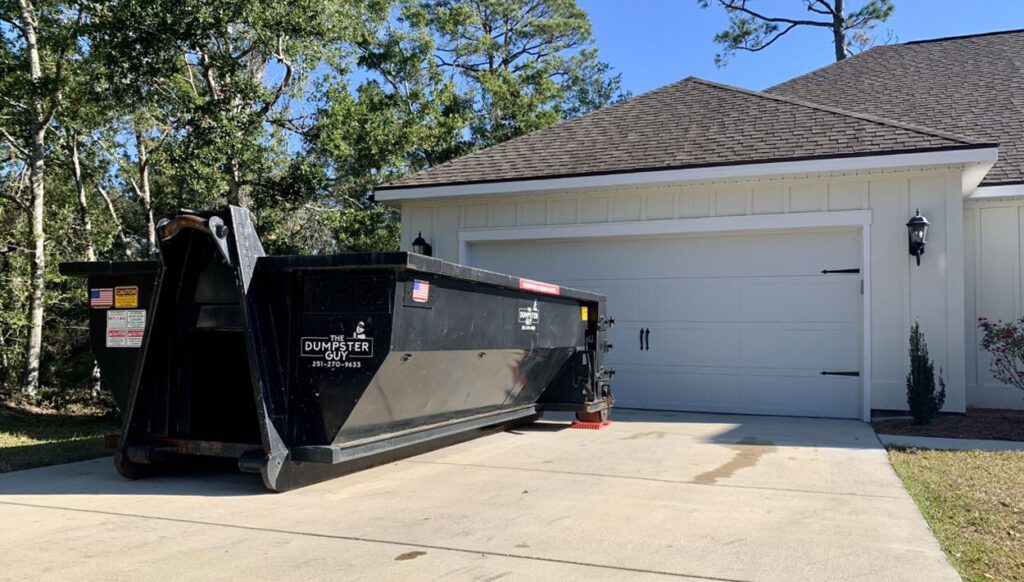
That's the part that catches people. With The Dumpster Guy in Escambia County, pricing is per dump, not per ton — $400 for a 10-yard, $450 for a 15-yard, and $500 for a 20-yard, with delivery, pickup, hauling, and disposal all included. Because there's no per-ton overage on the quote, a load that comes in heavier than you guessed doesn't turn into a bigger bill. The only real rule is to keep debris level with the top rail so the container can be hauled safely and legally, and to keep prohibited items out.
What is a dumpster weight limit, and why do overage fees exist?
A dumpster weight limit is a cap on how many tons a company includes in your base price, and overage fees are what they charge per ton once you pass it. The reason comes down to disposal: landfills and transfer stations bill haulers by the ton, so a company that prices by weight is simply passing that cost through to you.
The trouble is how it's often quoted. As The Dumpster Guy puts it, "some companies set a low weight limit and then charge per ton for anything over that limit. If your debris is heavier than expected, the final bill can be significantly more than the quote." A low headline price can look great until a few hundred extra pounds of tile or shingles push you into overage territory. Flat per-dump pricing sidesteps that math entirely — the number you're quoted is the number you pay.
How much does common debris actually weigh?
Weight sneaks up on people because dense building materials weigh far more than the bulky household junk that fills the same space. Here's a rough field guide to help you estimate before you load:
- Asphalt roofing shingles — about 60 to 80 lbs per bundle, or roughly 200 to 250 lbs per "square" (100 sq ft). A single-layer tear-off on an average home can easily run 2 tons or more.
- Concrete, brick, and block — around 2 tons per cubic yard solid, and still roughly 1.3 to 1.5 tons per cubic yard once broken up. This is the single fastest way to overload a container.
- Dirt, sod, and soil — about 1 to 1.3 tons per cubic yard, and noticeably heavier after Gulf Coast rain soaks it.
- Drywall and plaster — a single 4×8 sheet of drywall runs about 50 to 70 lbs; a whole-room demo adds up quickly.
- Tile, mortar, and stone — dense and deceptively heavy, similar to masonry.
- Household clutter, furniture, and cardboard — light by comparison; a 15-yard packed with general household debris often stays under 2 tons.
Which projects are most likely to blow past a weight limit?
Heavy, dense materials are what push a load over a weight cap — not the volume of stuff. Roof tear-offs, concrete and masonry removal, tile demolition, and dirt or landscaping debris are the usual culprits, because they pack serious tonnage into a small footprint.
General cleanouts are the opposite. A garage purge, a home decluttering, a move-out, or an estate cleanout is mostly furniture, boxes, clothing, and cardboard — bulky but light. Those jobs almost always run out of space before they run out of weight, which is why they're rarely a weight-limit problem in the first place. Knowing which camp your project falls into tells you whether weight is even worth worrying about.
How do you avoid surprise overage fees in Pensacola?
The simplest way to avoid an overage fee is to rent from a company that doesn't charge one — but if you're comparing quotes, a few habits protect you either way:
- Ask whether pricing is per dump or per ton. A flat per-dump price like The Dumpster Guy's has no weight-based surprise built in; a weight-based quote does.
- If a quote is weight-based, ask for the included tonnage and the per-ton overage rate in writing before you book.
- Match the load to the material. For heavy debris, mention it up front so you get the right container and setup rather than overloading a big one.
- Keep debris level with the top rail. Overfilled or over-height loads can't be hauled legally and may be refused or reworked.
- Separate the heavy stuff. Concrete, dirt, and masonry are best handled as their own load rather than mixed into a general cleanout.
What can't go in the dumpster at all?
Separate from weight, some materials simply aren't allowed in a roll-off dumpster in Escambia County: paints and solvents, household chemicals, propane tanks, batteries, tires, electronics, and appliances that contain refrigerants like refrigerators, freezers, and window AC units.
These aren't a weight issue — they're a disposal and safety issue — but they show up during the same renovation and cleanout jobs, so it's worth planning for them. They each have a separate disposal path, and if you're unsure whether something qualifies, just ask when you book.
What about really heavy loads like concrete or dirt?
Very heavy materials like concrete, brick, and dirt deserve a quick phone call before you order. Because they weigh so much per cubic yard, filling a large dumpster with them can exceed what any truck can legally haul, no matter how the company prices it.
The right move is never to quietly overload a container — it's to tell The Dumpster Guy what you're throwing away so they can send the appropriate setup for the weight. That keeps the haul safe and legal and keeps your project moving, instead of having a driver arrive to a container that can't be lifted.
Key Takeaways
- There's no universal dumpster weight limit — it depends on size and, above all, whether the company prices per dump or per ton.
- Overage fees exist because landfills bill haulers by the ton; weight-based companies pass that through, sometimes after a low headline quote.
- The Dumpster Guy in Escambia County prices per dump ($400 / $450 / $500) with no per-ton overage — a heavier load doesn't change the price.
- Dense debris drives weight: concrete runs ~2 tons per cubic yard and a roof tear-off can top 2 tons, while household cleanouts stay light.
- For concrete, dirt, or masonry, call ahead so you get the right container — never overload one, since over-limit loads can't be hauled legally.
Frequently Asked Questions
How much weight can you put in a dumpster?
It depends on the container size and the company's policy. Many companies include a set tonnage and charge per ton over it. The Dumpster Guy in Escambia County prices per dump with no per-ton overage — just keep the load level with the top rail and keep prohibited items out.
What happens if I go over a dumpster's weight limit?
With weight-based pricing, you're charged a per-ton overage fee on top of the base price, which can make the final bill much higher than the quote. With The Dumpster Guy's flat per-dump pricing there's no per-ton overage, though extremely heavy loads should still be discussed up front so the right container is delivered.
Does The Dumpster Guy charge by weight in Pensacola?
No. Pricing is per dump — $400 for a 10-yard, $450 for a 15-yard, and $500 for a 20-yard — with delivery, pickup, hauling, and disposal included and no per-ton overage fees.
What's the heaviest thing I can throw away?
Concrete, brick, dirt, and tile are the heaviest common materials, at roughly 1.3 to 2 tons per cubic yard. They can exceed what a truck can legally haul, so call ahead and mention heavy material so you get the correct setup.
How do I keep my dumpster from getting refused at pickup?
Keep debris level with the top rail — nothing mounded above it — and keep out prohibited items like chemicals, tires, batteries, and refrigerant appliances. Level, clean loads haul safely and legally every time.