Quick Summary
An estate cleanout goes best when you take it in order: confirm you have the legal authority to remove property, walk the house and photograph it before anything moves, then sort room by room into keep, sell, donate, and toss. Pull paint, chemicals, batteries, electronics, and propane out as you go, because none of it can go in a dumpster — Escambia County takes those free at the Perdido Landfill in Cantonment. For everything else, a roll-off in the driveway lets you work at your own pace instead of hauling carloads. Estate contents are bulky but light, so the container size matters far more than the weight, and The Dumpster Guy prices per dump rather than per ton.
How do you handle an estate cleanout in Escambia County, FL?
Start with authority, not with boxes. Before anything leaves the house, make sure the person doing the clearing has the legal standing to do it — usually the executor or personal representative named in the will, or appointed by the court. Once that's settled, walk the whole house and photograph every room before a single item moves. That record protects you if an heir asks later what happened to something.
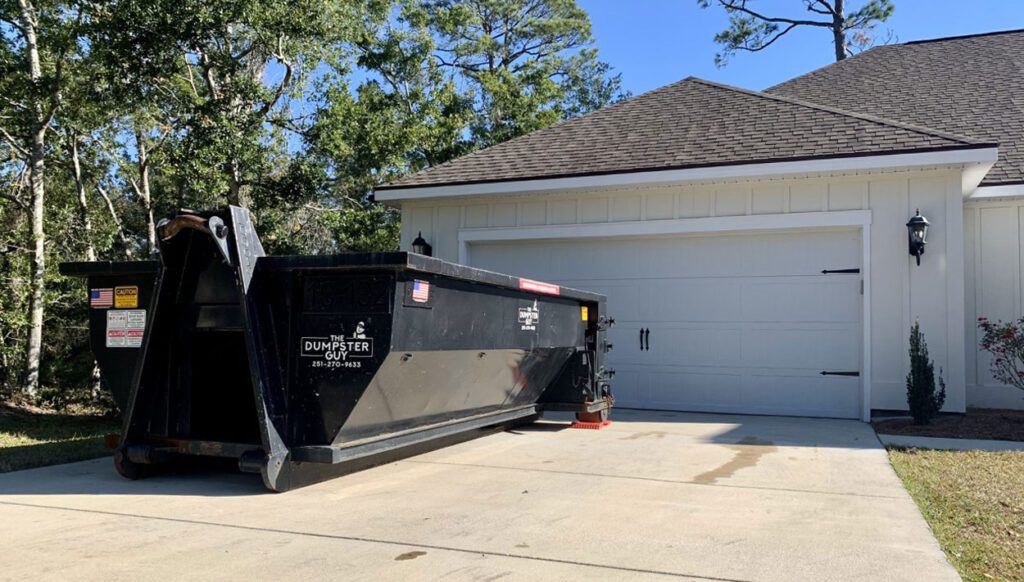
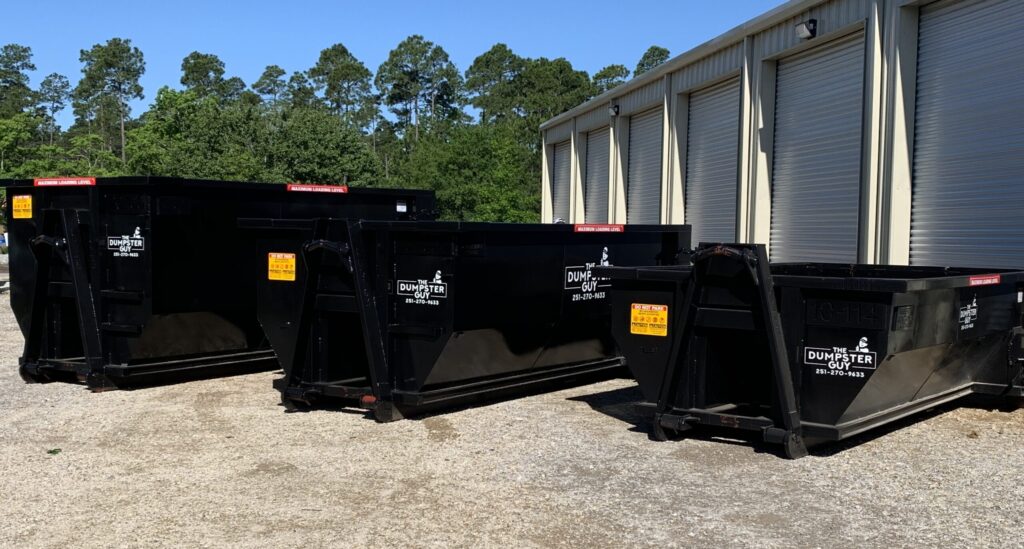
From there the job is mechanical: sort room by room into keep, sell, donate, and toss; set aside paint, chemicals, batteries, electronics, and propane tanks for the county's free household hazardous waste drop-off; and put a roll-off container in the driveway for the volume. A house full of furniture, mattresses, boxes, and closets is bulky but light, so the question is how much space you need, not how much weight you're allowed. The Dumpster Guy in Escambia County prices per dump — $400 for a 10-yard, $450 for a 15-yard, and $500 for a 20-yard, with delivery, pickup, hauling, and disposal included and no per-ton overage.
What has to happen before you throw anything away?
The single most common regret in an estate cleanout is moving too fast on day one. Find the will first, and confirm who has authority to distribute or dispose of property. In Florida that's typically documented through the probate court, and until it's clear, the safest thing you can do is secure the house and change the locks rather than start hauling.
Then search before you sort. Estates hide value in unglamorous places, and it rarely looks like treasure at a glance:
- Cash and documents tucked into books, envelopes, coat pockets, and the backs of drawers
- Deeds, titles, insurance policies, savings bonds, and tax records in filing cabinets and desks
- Jewelry, coins, and small collectibles in jewelry boxes, nightstands, and closet shelves
- Firearms, which need to be secured and transferred properly rather than handled casually
- Photographs, letters, and family records, which are usually what heirs care about most and are the easiest thing to lose in a bag of paper
- Anything old enough to be worth an appraisal — furniture, art, tools, china, instruments — before it heads to a donation pile
Get the heirs on the same page early
A quick conversation up front about who wants what saves an enormous amount of friction later. If family members are out of town, photograph the contested categories and share the pictures before anything is cleared. Once an item is gone, no amount of explaining brings it back, and estate cleanouts strain relationships far more often over communication than over money.
How do you sort an entire house without losing your mind?
Work in one room at a time and finish it before moving on. Jumping between rooms is what makes a cleanout feel endless — you end up with six half-sorted spaces and nowhere to stand. Give every item one of four destinations: keep, sell, donate, or toss. Anything that stalls you goes into a small 'decide later' box, not back onto the pile.
Sequence matters too. Begin with the rooms that carry the least emotional weight, where decisions are fast and progress is visible:
- Garage, shed, and outbuildings — mostly obvious keeps and obvious junk, and where the hazardous items usually turn up
- Kitchen and pantry — expired food, worn cookware, and duplicate small appliances clear out quickly
- Bathrooms and laundry — almost entirely disposal, with medications set aside for a take-back program rather than the trash
- Living and dining rooms — furniture decisions, which is where you learn how much container space you actually need
- Bedrooms, closets, and the attic — slower going, and better attempted once you have momentum
- Photographs, letters, and personal papers — save these for last, and give them their own afternoon
What can't go in the dumpster, and where does it go instead?
Some things simply aren't allowed in a roll-off, and an estate cleanout produces more of them than an ordinary decluttering job does, because garages and utility rooms accumulate for decades. Keep paints and solvents, household chemicals, pesticides and pool chemicals, motor oil, gasoline, antifreeze, propane tanks, batteries, tires, electronics, and appliances containing refrigerants — refrigerators, freezers, and window AC units — out of the container.
Escambia County makes this part easier than most places. The county's household hazardous waste program accepts these materials free from county residents at the Perdido Landfill, 13009 Beulah Rd in Cantonment, Monday through Saturday. The accepted list is broad and covers most of what an old garage holds:
- Paint — oil-based and latex, up to 20 gallons, plus paint removers
- Gasoline and antifreeze, up to 10 gallons each, along with used oil, brake fluid, solvents, and household cleaners
- Electronics — TVs, computers, monitors, printers, cell phones, and microwaves
- Batteries of nearly every kind, including automotive, marine, lithium, and rechargeable
- Fluorescent tubes and CFL bulbs, with a limit of ten each per visit
- Pesticides, herbicides, and pool chemicals
- Propane and scuba tanks, plus old flares and ammunition
Set the hazardous pile aside on day one
Designate a corner of the garage for this category before you start sorting, and move things there as you find them. It's far less painful than realizing at the end that a dozen cans of paint are sitting in the container and have to come back out. The county also runs a paint re-blending program, so leftover latex paint has somewhere useful to go.
What size dumpster do you need for an estate cleanout?
Size the container to volume, not weight. A full house of furniture, mattresses, clothing, boxes, and cardboard fills space fast while staying comparatively light, which is the opposite of a roof tear-off or a concrete job. As a rough guide:
- 10-yard — a condo, an apartment, or a single-room or single-garage clear-out
- 15-yard — the common choice for a typical two- or three-bedroom Pensacola home
- 20-yard — a full house with a garage, shed, or outbuildings, or a property that's been lived in for decades
Swapping beats guessing big
Estate cleanouts are the classic multi-dump job. Rather than trying to size one enormous container around a house you haven't sorted yet, most families do better keeping a manageable one on site and having it dumped as it fills. You pace the work instead of racing a deadline, and you're not paying for space you never used.
How much does an estate cleanout cost in Pensacola?
Container cost is the part you can pin down in advance. The Dumpster Guy charges per dump in Escambia County — $400 for a 10-yard, $450 for a 15-yard, $500 for a 20-yard — with delivery, pickup, hauling, and disposal all included. There's no per-ton overage, which matters here because a container packed with furniture and boxes weighs a lot less than the same space filled with demolition debris.
That flat structure is worth asking about anywhere you shop. Companies that price by weight include a set tonnage and bill a per-ton overage above it, so a low quote can grow after the container is weighed. With per-dump pricing, the number you're quoted is the number you pay, which is one less unknown in a month that already has plenty.
How long should you give yourself?
Be realistic, and then add time. A small condo can be handled over a long weekend with a couple of helpers. A three-bedroom family home with a garage generally takes one to three weekends of steady work. A property that's been in the family for decades, or one where heirs are coordinating from out of state, can run considerably longer — and there's nothing wrong with that.
Having a container on site through the sort is what makes a slower pace workable. Instead of loading a truck, driving to the landfill, and doing it again, you carry things out the door and drop them in. That's the difference between a job you chip away at after work and one that eats every free hour you have.
Where do you put the dumpster at an older Pensacola home?
Most estate cleanouts here happen at homes with driveways that were never designed around a roll-off truck. A little planning prevents most of the problems:
- Clear the driveway completely, including vehicles, boats, and trailers, before the delivery window
- Watch overhead clearance — live oak limbs and low power lines are the usual obstacles in older Pensacola neighborhoods
- Lay plywood under the container's rails if you're worried about marking a driveway surface
- Avoid soft or sandy ground, especially after a heavy rain, since a loaded container needs firm footing
- Leave a straight approach for the truck rather than a spot it has to maneuver into
- Confirm placement in advance if the property is in a neighborhood with an HOA or if street placement might be involved
Key Takeaways
- Confirm legal authority and photograph every room before anything is removed — the search for cash, documents, and valuables comes before the sorting.
- Work one room at a time, keep, sell, donate, or toss, and start with the garage and kitchen rather than the bedrooms and photographs.
- Paint, chemicals, gasoline, batteries, electronics, propane, and refrigerant appliances can't go in a dumpster; Escambia County takes them free at the Perdido Landfill on Beulah Rd in Cantonment.
- Size the container by volume, not weight — a 15-yard suits most two- or three-bedroom Pensacola homes, and swapping a manageable container beats guessing at a huge one.
- The Dumpster Guy prices per dump in Escambia County at $400, $450, and $500 with delivery, pickup, hauling, and disposal included and no per-ton overage.
Frequently Asked Questions
How do you handle an estate cleanout in Escambia County, FL?
Confirm who has legal authority to remove property, photograph every room before anything moves, then sort room by room into keep, sell, donate, and toss. Set hazardous items aside for the county's free drop-off at the Perdido Landfill, and keep a roll-off dumpster in the driveway for the volume so you can work at your own pace.
What should you not throw away during an estate cleanout?
Search for wills, deeds, titles, insurance policies, and savings bonds before clearing any paper, and check books, drawers, and coat pockets for cash and jewelry. Photographs and family records are the items heirs most often wish had been saved, so give them their own pass rather than bagging them with general paper.
What size dumpster do I need for an estate cleanout?
Estate contents are bulky rather than heavy, so size by volume. A 10-yard suits a condo or single-room clear-out, a 15-yard fits most two- or three-bedroom homes, and a 20-yard handles a full house with a garage or outbuildings. Many families keep one container on site and have it dumped as it fills.
Where do you take paint, chemicals, and electronics in Escambia County?
Escambia County accepts household hazardous waste free from county residents at the Perdido Landfill, 13009 Beulah Rd in Cantonment, Monday through Saturday. The program takes paint up to 20 gallons, gasoline and antifreeze up to 10 gallons, TVs, computers, microwaves, batteries, fluorescent bulbs, pool chemicals, and propane tanks.
How much does a dumpster cost for an estate cleanout in Pensacola?
The Dumpster Guy charges per dump in Escambia County: $400 for a 10-yard, $450 for a 15-yard, and $500 for a 20-yard. Delivery, pickup, hauling, and disposal are included, and there's no per-ton overage fee, so a container full of furniture and boxes costs what you were quoted.
How long does an estate cleanout usually take?
A condo or apartment can often be cleared over a long weekend. A three-bedroom home with a garage typically takes one to three weekends of steady work, and a long-occupied family home or one with out-of-state heirs can take longer. Keeping a container on site through the sort is what makes a slower pace practical.